
Skip to content

Capability

Slitting

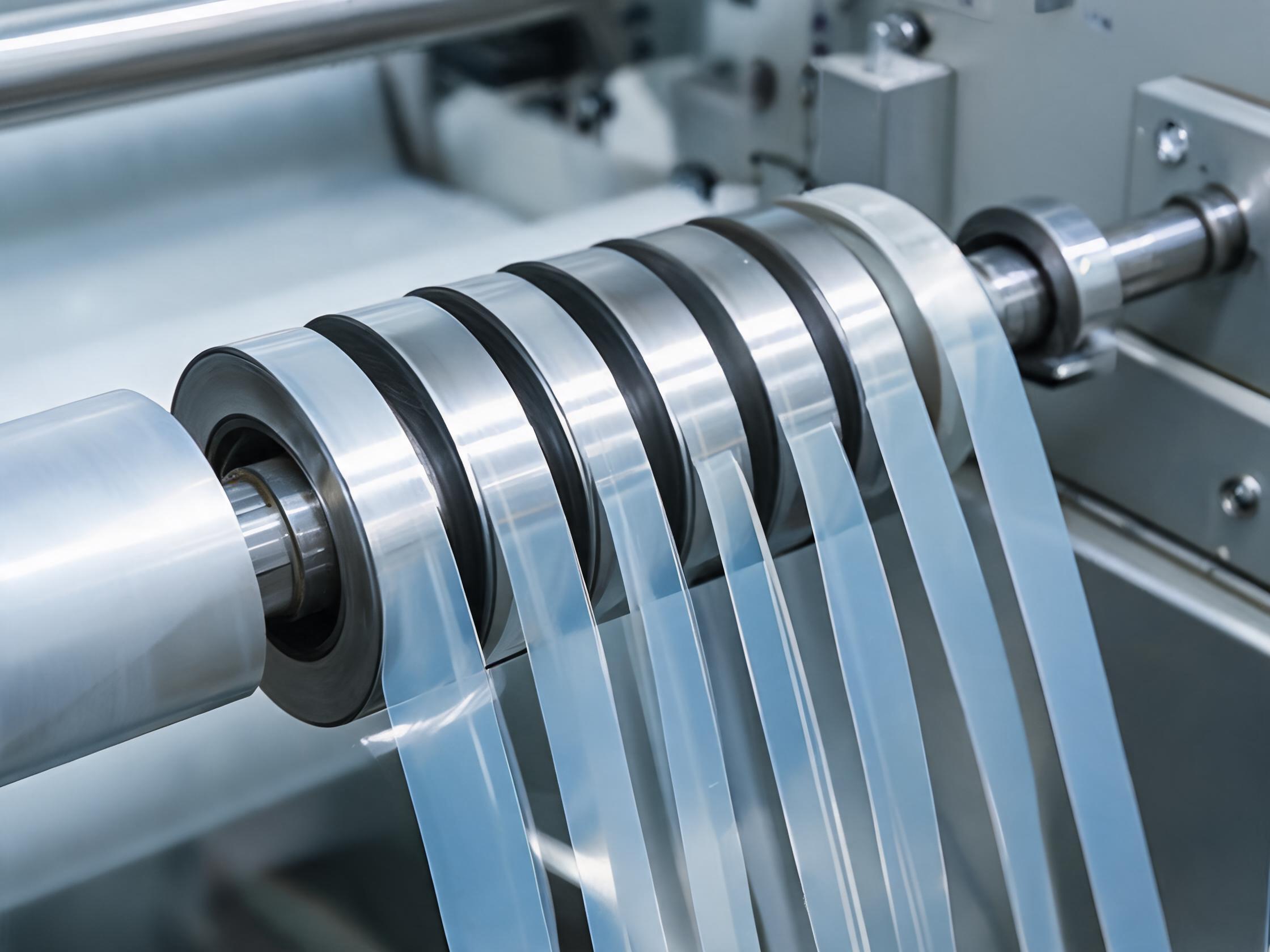
Master rolls are converted into slit rolls with a controlled width, clean edges and stable winding tension.

Slitting

Definition

What this process does

Slitting converts a master roll into narrower rolls at a controlled width and tension. It is used when a material arrives wider than the converting line or assembly cell can accept.

Each run starts from a confirmed roll width, core size and winding direction. Edges are trimmed, splices are minimised, and the finished roll is labelled with width, length and lot.

Boundaries

Where this process fits

Sample boundaries; the final route is confirmed from the material and drawing.

  • Widths below 3 mm or above 1,600 mm are reviewed as special projects (sample).
  • Heavy foil or rigid sheet may need a different edge-trimming setup.
  • Material with an exposed adhesive face requires a release liner.

Materials

Materials we can convert

  • PET and PP films
  • Foam and foam laminates
  • Nonwoven and tissue
  • Copper and aluminium foil
  • Single- and double-sided tapes

Capability range

Parameters

Values are confirmed per material and per drawing.

Capability range
ParameterValue
Typical width range3–1,600 mm (sample)
Typical slit tolerance±0.2 mm (sample)
Core diameter76 mm / 152 mm (sample)
Max roll diameter600 mm (sample)
Winding directionInward / outward

FAQ

Common questions

Can you slit small quantities?

Yes. Trial rolls and sample lots can be scheduled before a full production run.

How is edge quality controlled?

Blades are checked at set-up and edges are inspected during the run. A sample is retained from each lot.

Can you supply a custom core?

Yes. Core material, diameter and wall thickness are confirmed with the order.

Quotation

Send the part for slitting

Include the material, the drawing and the acceptance criteria. We will confirm the route.