
Skip to content

Capability

Laminating

Adhesives, carriers and liners are combined into stable multi-layer constructions, including transfer adhesive builds.

Laminating

Definition

What this process does

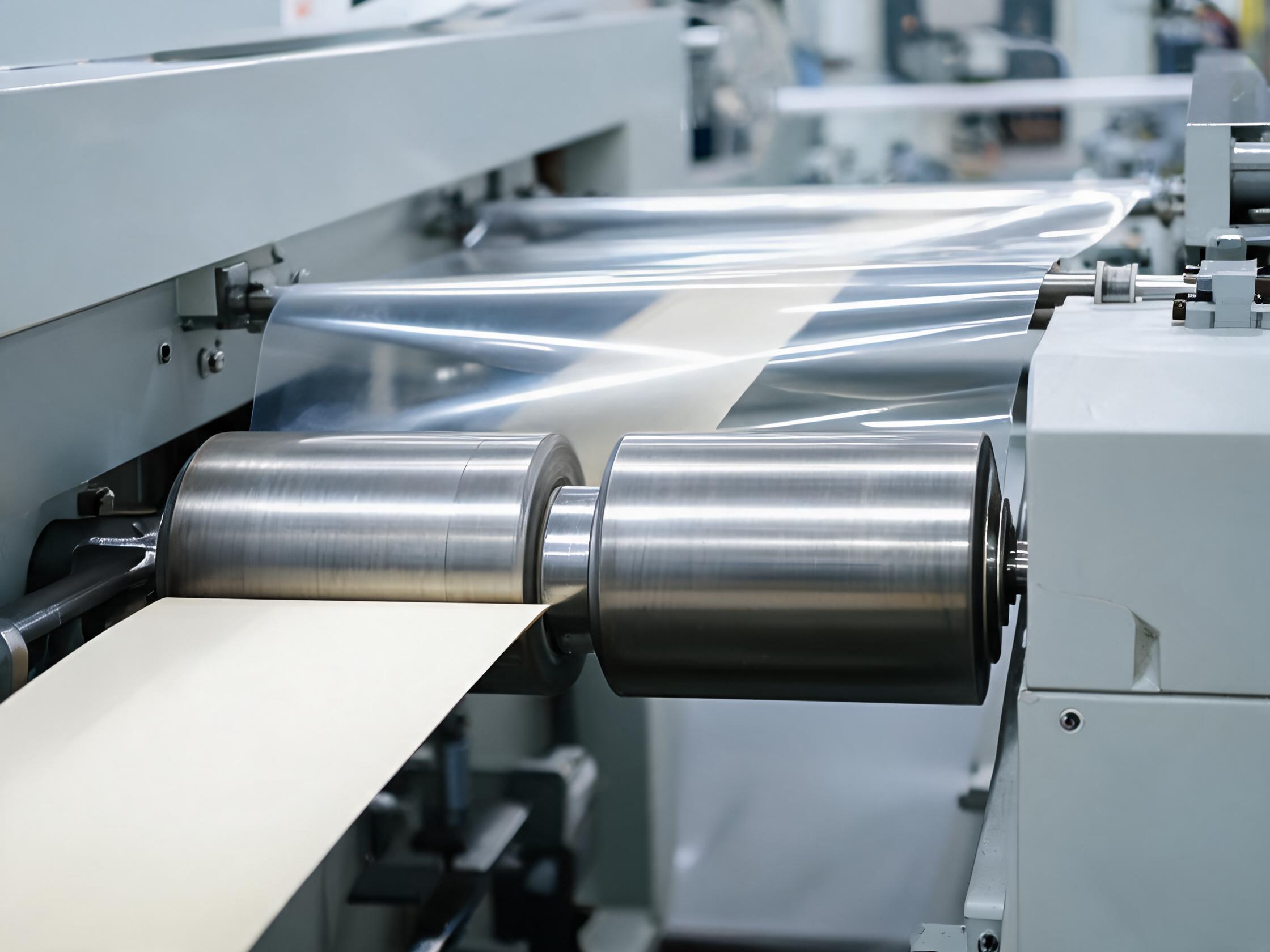
Laminating combines a carrier, an adhesive and a liner into one construction. It lets a converter build a material for a specific bonding, insulation or assembly task instead of accepting an off-the-shelf build.

Layer order, adhesive coat weight and liner type are confirmed before coating. Bond strength and dimensional stability are checked on the finished laminate.

Boundaries

Where this process fits

Sample boundaries; the final route is confirmed from the material and drawing.

  • Adhesive coat weight is quoted within a tested window; very high coat weights may need a trial.
  • Dissimilar materials with different thermal expansion need a stability check.
  • Textured or heavy liners may not run at high line speed.

Materials

Materials we can convert

  • Acrylic and rubber adhesives
  • PET, PP and paper carriers
  • Foam and nonwoven cores
  • Paper and film liners

Capability range

Parameters

Values are confirmed per material and per drawing.

Capability range
ParameterValue
Typical coat weight10–150 g/m² (sample)
Layer countUp to 5 (sample)
Max web width1,300 mm (sample)
Liner optionsPaper / PET film

FAQ

Common questions

Can you combine two adhesives?

Yes, where the layer order and curing behaviour allow it. The build is confirmed on a trial.

How is coat weight checked?

The coated web is weighed against the target and the result is recorded for the lot.

Can you laminate a foam core?

Yes. Foam cores are commonly combined with film or nonwoven carriers.

Quotation

Send the part for laminating

Include the material, the drawing and the acceptance criteria. We will confirm the route.